Cet article a été regroupé avec un guide plus complet : Extincteur CO2 : Guide Essentiel pour une Sécurité Incendie Efficace.
Sommaire
Introduction aux extincteurs CO2
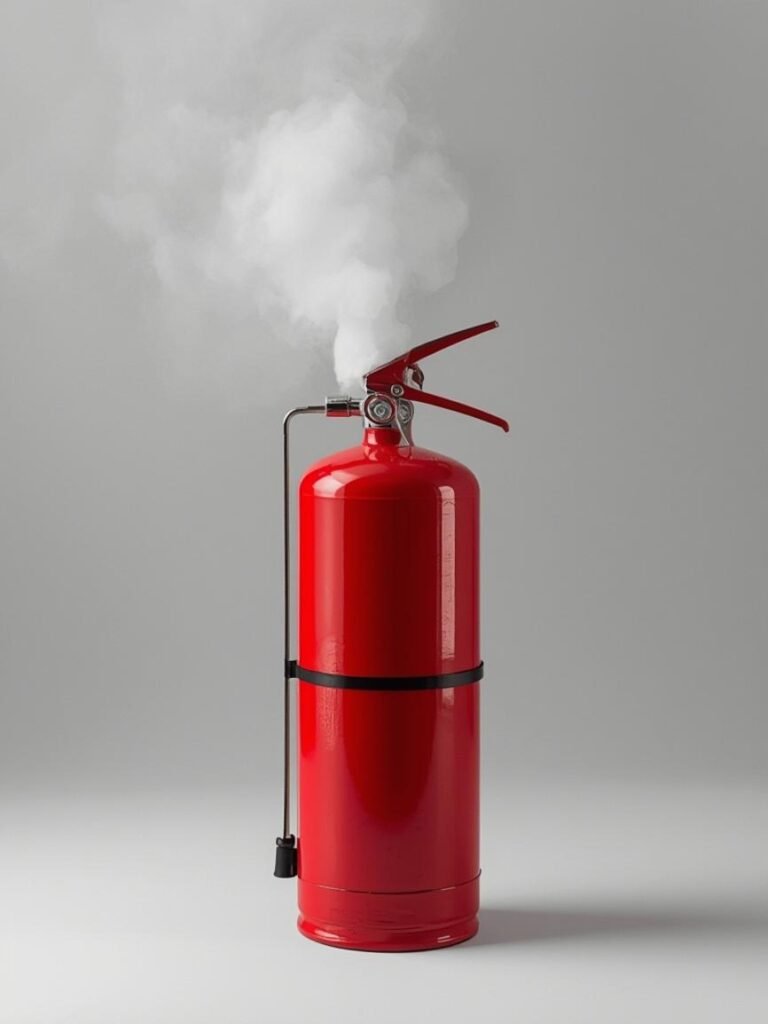
Dans les entreprises, salles serveurs, laboratoires et cuisines professionnelles, une première intervention rapide et correcte peut empêcher un incident mineur de se transformer en urgence entraînant un arrêt d’activité. C’est pourquoi de nombreux responsables sécurité gardent des extincteurs CO2 à portée de main pour les risques électriques et de liquides inflammables, là où l’eau serait dangereuse. Un extincteur au dioxyde de carbone agit en déplaçant l’oxygène et en refroidissant la zone du feu, ce qui le rend particulièrement utile autour des équipements sous tension et de l’électronique sensible. Néanmoins, une utilisation efficace dépend du choix du bon appareil, d’un positionnement correct et d’une technique reproductible sous pression.
Instructions étape par étape
1. Confirmez le type de feu et votre voie de sortie
Le CO₂ est généralement destiné aux feux de classe B (liquides inflammables) et aux feux électriques. Ne l’utilisez pas sur des feux d’huile/graisse de cuisson (classe K/F) ni sur des combustibles profonds (classe A) où une reprise du feu est probable. Avant d’agir, identifiez une sortie dégagée derrière vous.
2. Vérifiez l’état de l’extincteur (inspection rapide)
Recherchez une étiquette d’inspection valide, un sceau de sécurité intact et une corne/buse non endommagée. Les appareils CO₂ n’ont souvent pas de manomètre ; vérifiez plutôt qu’il semble suffisamment plein (le poids est un indicateur courant). Si quelque chose semble compromis, prenez un autre appareil et alertez immédiatement les autres.
3. Positionnez-vous à une distance sûre
Commencez à plusieurs pas de recul et approchez-vous seulement si nécessaire. Pour de nombreux extincteurs CO2, la portée de diffusion efficace est relativement courte comparée à certains modèles à poudre chimique — la maîtrise de la distance est donc importante.
4. Utilisez la méthode PASS, avec une précaution spécifique au CO₂
– Tirez la goupille.
– Visez la base des flammes.
– Pressez la poignée pour déclencher la diffusion.
– Balayez de gauche à droite.
Avec un extincteur au dioxyde de carbone, pointez la corne vers la base et évitez tout contact direct de la peau avec la corne de diffusion — le relâchement de CO₂ peut provoquer des brûlures froides/gelures en raison du refroidissement extrême.
5. Appliquez des jets courts et contrôlés et surveillez la reprise du feu
Le CO₂ se dissipe rapidement dans les espaces ouverts ou ventés. Utilisez des balayages contrôlés pour couvrir la source combustible. Si les flammes diminuent puis reprennent, vérifiez si le combustible continue d’alimenter le feu ou si la ventilation disperse le gaz.
6. Arrêtez si le feu ne s’améliore pas rapidement
Si le feu grandit, se propage, bloque votre sortie, ou que vous ne pouvez pas le maîtriser en quelques secondes, évacuez et appelez les secours. Les extincteurs sont réservés aux feux au stade naissant.
7. Après l’extinction, sécurisez les lieux
Surveillez la zone pour détecter une reprise du feu, coupez l’alimentation électrique si possible sans danger, aérez avec précaution (le CO₂ peut déplacer l’air respirable dans les espaces clos), et faites remplacer ou entretenir l’extincteur immédiatement après usage.
Conseils
– Sachez où le CO₂ est le plus efficace : il performe mieux dans les espaces fermés ou semi-fermés (armoires électriques, petites salles techniques). En extérieur ou dans les zones à fort courant d’air, envisagez si un autre agent est plus adapté.
– Formez les équipes à la manipulation de la corne : de nombreux modèles CO₂ ont une corne qui devient extrêmement froide pendant la diffusion. Apprenez aux intervenants à tenir correctement la poignée et à éviter de toucher l’extrémité de la corne.
– Adaptez la capacité au risque : un petit extincteur peut se vider rapidement. Pour les zones à haut risque (salles de groupes électrogènes, salles UPS, stockage de solvants), assurez une taille et une couverture d’extincteur adaptées selon la réglementation locale et l’évaluation des risques.
– L’emplacement compte : installez les extincteurs le long des voies de circulation normales, près des sorties, et loin des sources probables d’incendie — afin de pouvoir les atteindre sans vous approcher du danger.
– Attention au déplacement d’oxygène : dans les espaces étroits, le CO₂ peut réduire les niveaux d’oxygène. Si quelqu’un se sent étourdi ou essoufflé, sortez immédiatement et aérez.
Méthodes alternatives
– Extincteurs à poudre chimique ABC : plus polyvalents pour les dangers mixtes (classes A/B/C), et offrant souvent un temps de diffusion plus long et une meilleure efficacité en extérieur. Inconvénient : nettoyage des résidus et dommages potentiels aux équipements électroniques sensibles.
– Systèmes à agents propres (ex. FK-5-1-12, gaz inerte) : idéaux pour les salles serveurs et environnements critiques où les résidus sont inacceptables. Ils peuvent être installés en systèmes à noyage total avec détection automatique.
– Couvertures anti-feu (scénarios limités) : utiles pour de petits feux contenus sur un équipement ou des vêtements, mais ne remplacent pas des extincteurs et une formation appropriés.
– Contrôles axés sur la prévention : un bon stockage des liquides inflammables, la maintenance électrique, la surveillance thermique et le rangement réduisent le risque d’inflammation et la charge combustible — souvent la stratégie « d’extinction » la plus rentable.
Conclusion
Bien utilisés, les extincteurs CO2 sont un excellent choix pour les incidents électriques et de liquides inflammables où minimiser les résidus est essentiel. La clé est une prise de décision rigoureuse : confirmer la classe du danger, garder une sortie derrière vous, appliquer la méthode PASS avec les précautions spécifiques au CO₂, et évacuer si les conditions ne s’améliorent pas immédiatement. Pour les équipes gérant des environnements riches en électronique, un extincteur au dioxyde de carbone peut faire partie intégrante d’un plan de protection incendie plus large — aux côtés de la prévention, de la formation et des solutions d’extinction complémentaires adaptées.
Besoin d’un extincteur CO2 pour vos locaux électriques ou serveurs ? Découvrez notre gamme d’extincteurs ou contactez Fire Safety Algérie pour un conseil adapté.
Sur le même sujet
Ressources officielles
- Direction générale de la Protection civile — autorité compétente en matière de sécurité incendie en Algérie.
- Certification NF Extincteurs (AFNOR) — référence française et internationale ; elle n’a pas valeur de réglementation en Algérie.
Ping : Extincteur Halogéné : Efficacité dans la Lutte Incendie