
Table of Contents
Introduction
Fire incidents in the workplace are costly, disruptive, and—most importantly—preventable with the right preparation. A strong safety culture starts with consistent education, clear roles, and routine practice that aligns with recognized guidance and your site’s real hazards (electrical, hot work, storage, kitchens, chemicals, or crowded public areas). When organizations invest in Employee Fire Safety Training and reinforce it through credible Workplace Fire Safety Training, teams respond faster, evacuate smarter, and reduce the risk of injuries and property loss. This post breaks down a practical, step-by-step approach you can implement across offices, warehouses, schools, clinics, factories, and multi-tenant buildings—without overcomplicating it.
Step-by-Step Instructions
1. Identify your fire risks and ignition sources
Start with a walk-through and a simple risk register: fuel sources (paper, packaging, solvents), heat sources (machinery, chargers, cooking equipment), and oxygen flow (ventilation paths). Review incident logs, near-misses, and maintenance records to spot patterns.
2. Map escape routes and assign responsibilities
Confirm every area has clear egress, functioning emergency lighting, and visible exit signage. Assign fire wardens by zone, define who calls emergency services, who assists visitors, and who checks high-risk rooms (where safe). Post evacuation maps at decision points.
3. Align your plan with recognized standards and local requirements
Use authoritative references to validate your program’s structure and inspection cadence. For widely accepted guidance, consult Workplace Fire Safety Training, Workplace Fire Safety Training, and Workplace Fire Safety Training to confirm expectations around fire prevention, emergency action plans, and management systems.
4. Train people on alarms, evacuation, and extinguisher basics
Cover alarm signals, muster points, and “leave immediately” decision-making. Teach PASS (Pull, Aim, Squeeze, Sweep) and—equally important—when not to fight a fire. This is where Employee Fire Safety Training becomes most valuable: short, role-based modules help teams retain what matters under stress.
5. Run drills and measure performance
Schedule drills at least annually (more often for high-risk sites). Time evacuations, track headcount accuracy, and document bottlenecks (blocked corridors, slow alerting, confusion at assembly points). Treat drills as data: what was the total evacuation time, and what slowed it down?
6. Inspect and maintain critical equipment
Verify extinguishers are accessible, tagged, and within service dates. Confirm alarms, detectors, sprinklers, emergency lights, and fire doors function as intended. Build a simple checklist for monthly visual checks and planned preventive maintenance.
7. Improve, retrain, and document
After each drill, update maps, refresh signage, and adjust responsibilities. Keep training records, drill logs, and inspection reports in one place for audits and continuous improvement.
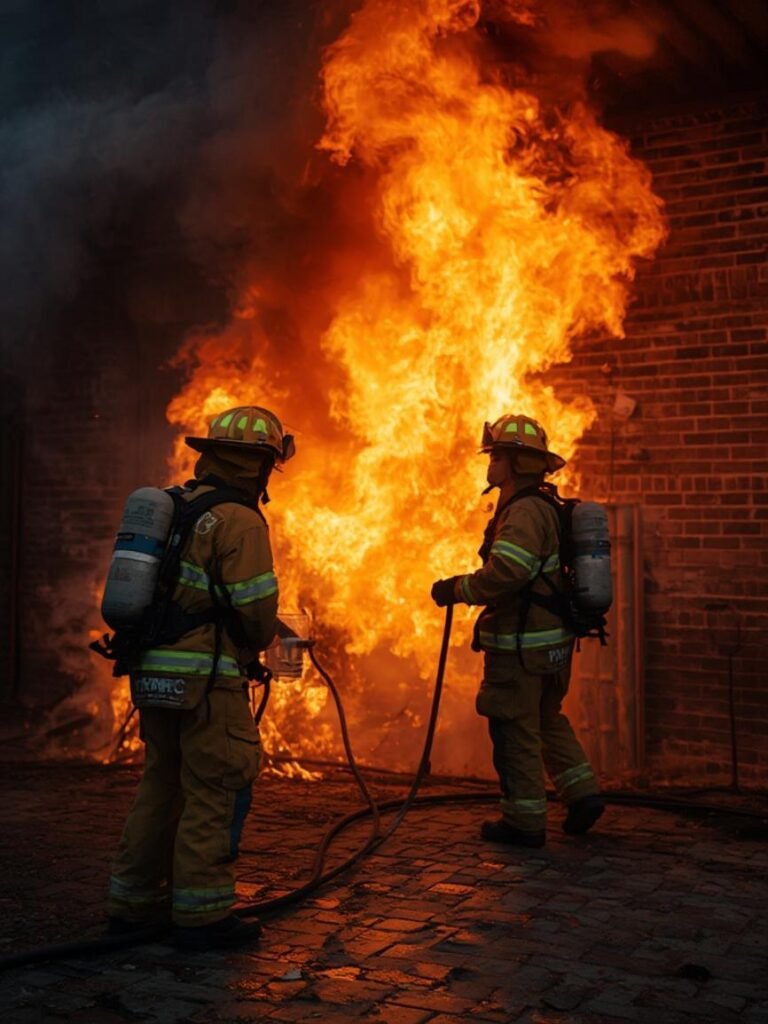
Tips
– Make training role-specific: Receptionists need visitor management steps; maintenance teams need hot-work controls; supervisors need accountability procedures. Tailor content by task, not just by department.
– Use microlearning for retention: Five-to-ten-minute refreshers spaced throughout the year outperform one long session for memory and compliance.
– Reduce evacuation friction: Keep corridors clear, store materials away from exits, and ensure doors latch correctly. Small housekeeping fixes can meaningfully improve evacuation flow.
– Practice headcounts realistically: Use updated rosters, include contractors, and plan for visitors. Consider a backup method if mobile networks fail.
– Turn near-misses into lessons learned: A tripped breaker, overheated device, or blocked exit is a training opportunity—capture it, share it, fix it.
Alternative Methods
– Scenario-based tabletop exercises: Instead of only running full evacuations, gather teams to walk through “what if” situations—after-hours smoke detection, a blocked stairwell, or a chemical storage fire. This builds decision-making skills and clarifies escalation paths.
– Blended learning (online + hands-on): Combine short e-learning modules with practical demonstrations (alarm recognition, extinguisher handling, door-check procedures). This approach scales well across multiple sites.
– Zone-focused drills: If full-building drills disrupt operations, rotate drills by floor or department while still validating communication, muster procedures, and accountability.
– Third-party audits and inspections: Periodic external reviews can uncover blind spots in signage placement, compartmentation, storage practices, or documentation quality.
– Behavior-based safety prompts: Use posters, toolbox talks, and weekly supervisor check-ins to reinforce safe charging practices, proper storage, and hot-work permits.
Conclusion
A resilient fire safety program is built on repeatable processes: identify risks, plan escape routes, train people, test the plan, and continuously improve. When Employee Fire Safety Training is reinforced by reputable Workplace Fire Safety Training guidance and consistent drills, employees don’t just “know the rules”—they can act decisively under pressure. Start with one site assessment and one measurable drill, then iterate. The result is safer people, stronger compliance, and a workplace that’s prepared when seconds matter.